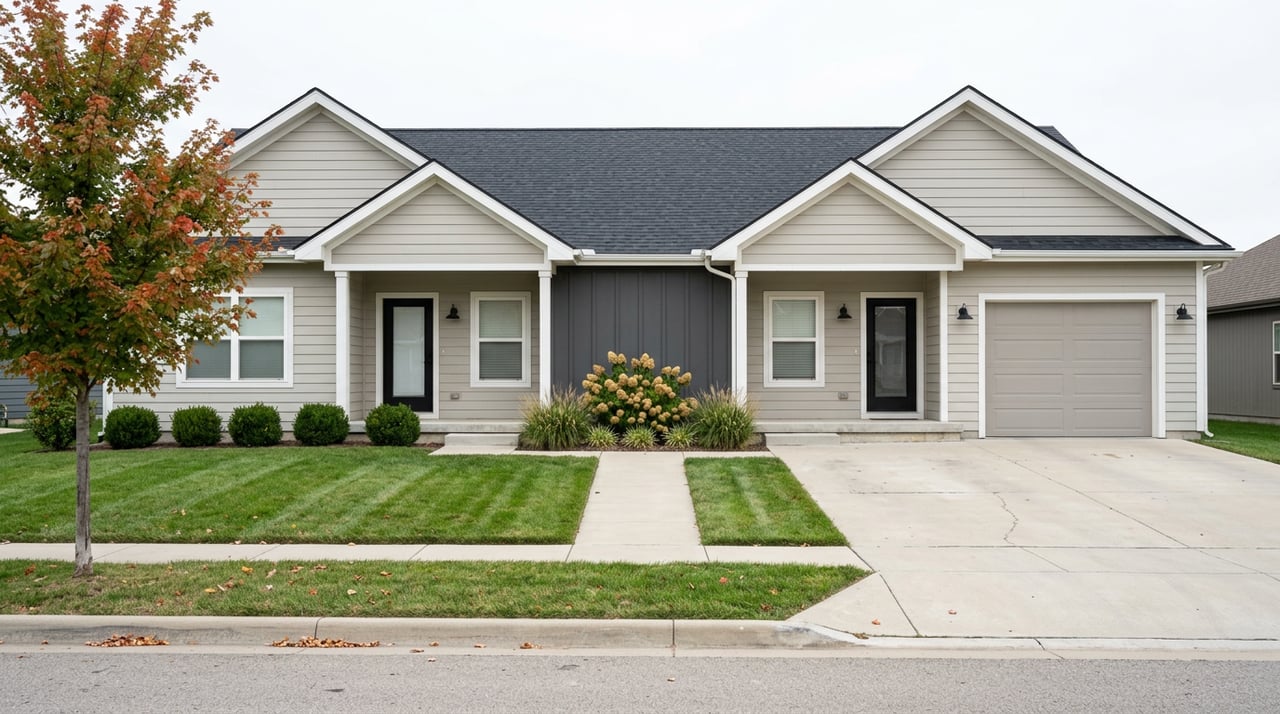
What if your next-door neighbor helped pay your mortgage? That is the simple idea behind house hacking, and Jefferson County gives you a practical place to try it. You want lower housing costs, a smart path into real estate, and clear steps you can follow without surprises. In this guide, you will learn how duplex investing works in Louisville, what local rules to watch, financing paths to consider, and sample numbers you can adapt. Let’s dive in.
Why house hacking fits Jefferson County
Jefferson County is relatively affordable compared with many metros. That helps your numbers pencil when you buy a duplex, live in one unit, and rent the other. Rents across Louisville average in the low 1,300s according to recent snapshots, which gives you a helpful baseline for setting expectations on a second unit. You can scan current averages by neighborhood and unit size using RentCafe’s Louisville trends to ground your estimates in real data before you write an offer. See the latest city averages on the RentCafe Louisville trends page to calibrate your model.
Buyer tip: market speed matters. Recent reports show homes often go pending within a few weeks, so build your offer plan and lender pre-approval early. A clean timeline and clear lender letter help you compete when the right duplex hits the market.
Choose the right property
Duplex vs triplex
- Duplex: common entry point for house hackers. Easier financing, simpler management, and strong resale.
- Triplex or fourplex: more income potential, but financing rules can tighten and repairs can scale up. Plan for reserves and professional inspections.
Neighborhood quick map
- Near-in, higher-demand areas: NULu, Butchertown, Highlands, Old Louisville, Clifton, Crescent Hill, Germantown, Schnitzelburg. These often support above-average rents due to walkability and proximity to jobs and amenities.
- Value plays with lower entry prices: Shelby Park, Shawnee, Park Hill, and several pockets in the near south and west. Underwrite conservatively, verify recent rent comps, and budget for updates.
- Suburban options where duplexes are less common: St. Matthews, Hikes Point, Middletown, Okolona. When you do find small multis here, land value and tenant demand can be strong. For broad neighborhood context, review the city’s neighborhood overview on Live in Lou.
Always pull live comps for the exact block. Use citywide rent averages as a starting line, then adjust up or down 10 to 30 percent based on location and unit quality.
Finance your duplex
Smart financing is what makes house hacking possible. Your path depends on credit, cash, and intended occupancy.
FHA for 2 to 4 units
- FHA allows you to buy a 1 to 4 unit property if you occupy one unit as your primary home. Minimum down payment can be as low as 3.5 percent for qualified buyers.
- For 3 to 4 unit properties, FHA adds extra underwriting checks, including a self-sufficiency test using projected rents.
- County loan limits change each year. Use HUD’s official lookup for Jefferson County limits by unit count before you shop.
Helpful resource: Check FHA limits on HUD’s loan-limit lookup tool.
VA loans for eligible veterans
- VA financing can be used on 2 to 4 unit properties when the veteran occupies one unit. This can allow low or zero down payment options, subject to lender guidelines and entitlement.
- Review VA guidance with your lender so you know how rental income, reserves, and occupancy are treated.
Reference: See VA multi-unit guidelines in the VA Lenders Handbook, Chapter 7.
Conventional and 2026 conforming limits
Conventional loans follow FHFA county loan limits. For Jefferson County in 2026 the conforming limits are:
- 1-unit 832,750
- 2-unit 1,066,250
- 3-unit 1,288,800
- 4-unit 1,601,750
These caps matter if you plan to use a conventional loan at higher price points. Underwriting rules for 2 units can differ from single-family, including reserves and how rental income is counted. Confirm details with your lender early.
Source: See FHFA’s 2026 conforming loan limits by county.
Down payment help in Kentucky
Kentucky Housing Corporation (KHC) offers first-mortgage options and down payment assistance that may pair with FHA, VA, or conventional products. Program terms update over time. Review current income limits, purchase-price caps, and availability with your lender and on KHC’s site.
See KHC’s Down Payment Assistance and Tax Credits page for current options.
Sample numbers you can adapt
The numbers below are illustrations to show how a second unit’s rent can offset your monthly payment. Use live lender quotes for rates, exact property taxes, and current rent comps before you write an offer.
Assumptions for both examples:
- 30-year fixed rate near 6.0 percent based on recent Freddie Mac PMMS averages.
- Jefferson County property taxes estimated near 0.86 percent of assessed value for rough budgeting. Confirm parcel-specific amounts and any taxing districts. You can use this Kentucky property tax calculator for context.
Scenario A: starter duplex, owner-occupied
- Purchase price: 220,000
- Financing: FHA, 3.5 percent down. Down payment about 7,700. Loan about 212,300.
- Monthly principal and interest at 6.0 percent: about 1,274.
- Taxes and insurance estimate: property tax about 158 per month, insurance about 75 per month.
- Total estimated PITI: about 1,507 per month.
- Rent from the second unit: assume 1,100 gross based on conservative comps. After a 5 percent vacancy and a small maintenance reserve, net rent contribution about 950 to 1,000 per month.
Estimated out-of-pocket housing cost while you live in the other unit: about 500 to 600 per month in this illustration.
Scenario B: moderate duplex, owner-occupied
- Purchase price: 350,000
- Down payment: 20 percent. Loan about 280,000.
- Monthly principal and interest at 6.0 percent: about 1,678.
- Taxes and insurance estimate: tax about 251 per month, insurance about 100 per month.
- Total estimated PITI: about 2,029 per month.
- Rent from the second unit: assume 1,600 gross. After vacancy and a small maintenance reserve, net about 1,380 per month.
Estimated out-of-pocket housing cost: about 600 to 700 per month in this illustration.
These examples show how a well-chosen duplex can reduce your housing cost while you build equity. Your results will vary with the exact rate, taxes, insurance, unit size, location, and condition.
Local rules you must know
Louisville Metro rental registry
Louisville Metro requires owners to register long-term rental units under LMCO Chapter 119. The ordinance outlines registration, fees, and a random inspection program in certain areas. You should confirm a property’s registration status and any inspection history during due diligence, and budget for any required fees.
Read the LMCO Chapter 119 ordinance text on Louisville’s Legistar portal.
Landlord-tenant basics in Kentucky
Kentucky uses the Uniform Residential Landlord and Tenant Act in jurisdictions that have adopted it. Notice periods and eviction steps are set by statute, and timelines can be short. Before you buy, review a plain-language summary of the Kentucky eviction process and speak with your attorney or property manager about local court timelines.
See a Kentucky eviction process overview to understand notice and filing basics.
Zoning, conversions, and code
Thinking about converting a single-family home to a duplex or adding a unit? Confirm permitted use with Louisville Metro Planning and Design and budget for permits and code items like fire separation, egress, and utilities. The city’s rental registry ties to property maintenance enforcement, so a clean code record helps your long-term plan.
Due diligence checklist
- Pull recent duplex or triplex sales comps for the exact block. Confirm capex needs and price per unit.
- Scan live rent comps for similar unit types and finishes. Start with city averages and adjust for location and condition.
- Confirm zoning and permitted use. If the building is already a duplex, verify it is legal and registered with the Metro rental registry.
- Order a full inspection that fits the age of the property. Include pest, HVAC, roof, and sewer scope where older lines are likely.
- Verify taxes through the parcel’s latest bill. Check for special taxing districts and budget for reassessment.
- If you plan updates, ask your lender about FHA 203(k) or similar rehab options early and confirm eligibility.
- Review landlord-tenant notice requirements and court timelines so your lease and systems are compliant from day one.
Resources:
- Freddie Mac PMMS for current rate context.
- FHFA 2026 loan limits by county for Jefferson County caps.
- HUD loan-limit lookup for FHA caps by unit count.
- KHC DPA and tax credits for assistance options.
- LMCO Chapter 119 ordinance for rental registration details.
How Paul Kiger Group helps you win your house hack
You want a clear plan, clean numbers, and a home that works today and later when you move on to the next place. Our team helps you:
- Identify duplex and small multi options that match your budget and rent goals.
- Coordinate rent comps and lender introductions so your underwriting is grounded in real quotes.
- Structure offers and timelines that fit Louisville’s market speed.
- Manage inspections, repairs, and vendor scheduling with local pros.
- Map an exit plan. When it is time to move, we can list your unit with high-quality media, staging, and Coldwell Banker distribution, or help you 1031 into your next property.
Ready to explore duplex opportunities or get a data-backed read on your options? Connect with Paul Kiger for a friendly, no-pressure conversation. Want to know what your current home could sell for before you buy? Ask for your free home valuation.
FAQs
What is house hacking in Jefferson County?
- House hacking means you buy a small multi-unit property, live in one unit, and rent the others so the rent helps offset your mortgage and housing costs.
How much down payment do I need for an owner-occupied duplex?
- FHA can allow as little as 3.5 percent down for qualified buyers who occupy one unit, while conventional and VA options vary by borrower profile and lender overlays.
What rents should I use when modeling a duplex in Louisville?
- Start with city averages in the low 1,300s, then adjust based on neighborhood, unit size, and finishes. Use current listings and recent leases for the exact block to refine your estimate.
Are there local rules for registering rental units in Louisville?
- Yes. Louisville Metro requires registration of long-term rentals under LMCO Chapter 119, and there is a random inspection program in some areas. Confirm status during due diligence.
What loan limits apply to duplex purchases in Jefferson County?
- In 2026 the FHFA conforming limit for 2 units in Jefferson County is 1,066,250. FHA limits differ and should be confirmed on HUD’s loan-limit lookup tool.
Can I use a VA loan to buy a duplex if I am eligible?
- Yes, if you occupy one unit and meet lender and VA guidelines. Speak with a VA-experienced lender about income treatment, reserves, and entitlement.
How do interest rates affect my house hack math?
- Small rate changes can move your monthly payment by hundreds of dollars. Check current Freddie Mac PMMS trends and get a live quote from your lender before you offer.