Wondering what gives Jefferson County homes their character from one block to the next? In this part of the Louisville metro, you can see more than one era of growth written right into the housing stock, from compact shotgun houses to ornate Victorians and easy-living ranch homes. If you are buying, selling, or simply trying to understand an older property, knowing the major home styles can help you spot value, anticipate upkeep, and find the right fit for your lifestyle. Let’s dive in.
Why Jefferson County Has So Many Styles
Jefferson County’s older homes reflect several major growth periods in Louisville. Late-19th-century urban expansion helped shape older city neighborhoods, while turn-of-the-century streetcar development added early-20th-century forms like bungalows and Foursquares.
Later, postwar growth brought more Ranch and Minimal Traditional homes to areas such as Beechmont and Chickasaw. That layered history is part of what makes the county so visually interesting for buyers and sellers today.
Shotgun Houses in Louisville
Shotgun houses are one of Louisville’s most recognizable home types. These homes are typically one room wide and two to three rooms deep, which creates a long, narrow floor plan that feels very different from wider houses.
You may also come across camelback shotguns, which add a partial second story over the rear part of the home. On older urban blocks around Louisville, this vernacular style remains a defining part of the streetscape.
What buyers should know about shotguns
The layout is efficient, but it can be more constrained when you want to renovate. Changes to the kitchen, bathroom, or circulation pattern can affect the whole house more than they would in a broader floor plan.
That does not make a shotgun less appealing. It just means you should think carefully about how you want to live in the space before planning major updates.
Victorian Styles: Italianate and Queen Anne
If you love decorative detail, Jefferson County’s Victorian-era homes may be the styles that catch your eye first. Old Louisville, Limerick, and Clifton all include strong examples of Italianate and Queen Anne homes, from large architect-designed residences to simpler frame houses.
These homes often feel more formal and vertically arranged than later styles. That can be a big draw if you appreciate historic character and distinct room separation.
Italianate homes
Italianate homes were most common from the 1850s through the 1880s. They are known for vertical emphasis, low overhanging roofs, decorative eave brackets, narrow windows with pronounced hoods, and in some cases towers, cupolas, or projecting porches.
In practical terms, Italianate homes often reward owners who enjoy period detail and are comfortable with preservation-sensitive maintenance. Rooflines, trim, and masonry details can be a meaningful part of the home’s character.
Queen Anne homes
Queen Anne homes became popular from about 1880 to 1910. They usually look more eclectic, with asymmetrical forms, varied exterior materials, intersecting gables, turrets or dormers, spindlework, and stained or multi-pane windows.
These homes can offer striking curb appeal and architectural personality. They also tend to have more visual complexity on the exterior, which can translate to more upkeep over time.
Craftsman Bungalows and American Foursquares
For many buyers, early-20th-century homes offer a sweet spot between charm and day-to-day livability. In Jefferson County, you can find strong concentrations of Craftsman bungalows and American Foursquares in places like Clifton, Cherokee Triangle, and Beechmont.
These styles are often easier to understand at first glance than ornate Victorian homes. Their layouts and features tend to feel practical, even when the homes retain historic details.
Craftsman bungalows
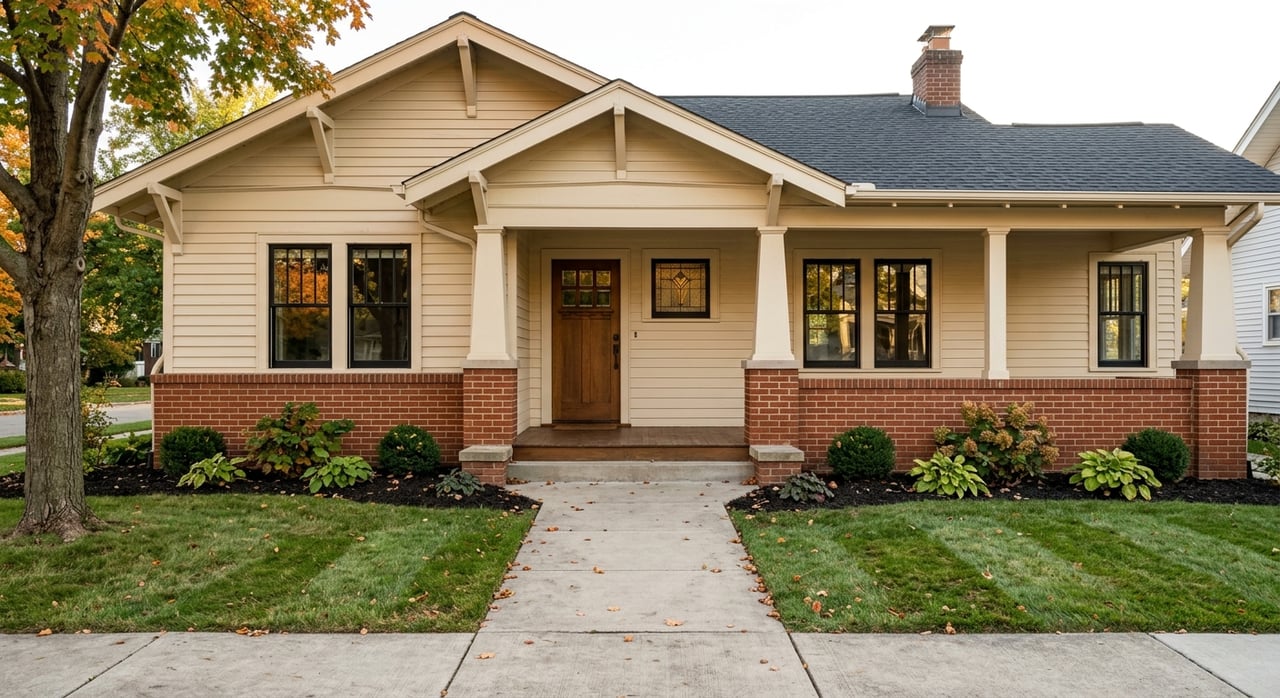
Craftsman bungalows are usually one to two stories with low-pitched roofs, broad gables, wide porches, and an emphasis on natural materials. Many also include built-ins, which can add both charm and function.
One key feature buyers often appreciate is the more open feel. The bungalow form often reduced or eliminated hallways, which can make the layout feel more connected than older Victorian floor plans.
American Foursquares
American Foursquares are the boxier companion to bungalows. They typically have a two-story square shape with four rooms per floor around a central hall.
That simple structure makes them easy to explain and easy to live in. If you want an older home with straightforward room organization, a Foursquare can be a very practical option.
Colonial Revival and Tudor Revival Homes
As Jefferson County neighborhoods continued to develop, Colonial Revival and Tudor Revival homes became part of the mix. You can see these styles in Clifton, Cherokee Triangle, and Beechmont, often in houses built after the Victorian peak.
Both styles bring strong visual identity, but they do it in very different ways. One leans formal and symmetrical, while the other feels more storybook and irregular.
Colonial Revival homes
Colonial Revival homes often emphasize symmetry. Common features include pedimented entries, columns or pilasters, fanlights, and side-gabled or hipped roofs.
If you like a classic, balanced exterior, this style may appeal to you. Many buyers see Colonial Revival homes as timeless and easy to understand visually.
Tudor Revival homes
Tudor Revival homes usually feature steeply pitched roofs, asymmetrical massing, half-timbering, and tall or leaded-glass windows. In Louisville district materials, you can also find Tudor Gothic and half-timbered examples.
These homes often stand out immediately from the street. Their roof forms and façade details create a distinct look that appeals to buyers who want character that feels a little different from standard traditional architecture.
Ranch and Minimal Traditional Homes
Not every older home in Jefferson County is ornate or highly stylized. In neighborhoods shaped by postwar development, you are more likely to find Ranch and Minimal Traditional homes that offer a simpler, more flexible way of living.
Beechmont shows a mix of Tudor Revival, Minimal Traditional, Colonial Revival, and Ranch homes. Chickasaw is described as predominantly Minimal Traditional with Ranch and ranchette forms in later subdivisions.
Why these homes appeal to buyers
Postwar Ranch homes usually have a low, horizontal profile, broad eaves, large windows, and attached garages. For many buyers, they feel more immediately compatible with contemporary routines than older stacked floor plans.
Minimal Traditional homes also tend to offer simpler forms and more manageable maintenance needs than highly detailed period homes. If you want vintage age without extensive ornament, this category is worth a close look.
Where You’ll See These Styles
While Jefferson County has style overlap in many areas, a few neighborhood patterns stand out.
- Old Louisville and Limerick: Strong Victorian-era streetscapes with Italianate, Richardsonian Romanesque, Queen Anne, Craftsman, and Colonial Revival examples.
- Cherokee Triangle and Clifton: A broad mix of late-19th- and early-20th-century homes, including Italianate, Craftsman, Tudor Gothic, Princess Anne, and Bungalow Craftsman forms.
- Beechmont and Southern Heights: Notable concentrations of bungalows, American Foursquares, Tudor Revival, Minimal Traditional, Colonial Revival, and Ranch homes.
- Chickasaw: A postwar housing pattern dominated by Minimal Traditional and Ranch or ranchette forms.
- Older urban Louisville blocks: Shotgun and camelback shotgun houses remain a defining vernacular type.
What Historic Home Buyers Should Consider
Falling for a home’s architecture is easy. Understanding what comes with that style is what helps you buy with confidence.
In general, bungalows, Foursquares, and ranches often offer the easiest balance of character and livability. Victorian and Italianate homes can be deeply rewarding, but they tend to suit owners who are comfortable with more exterior upkeep and preservation-sensitive projects.
Think about layout, not just looks
A beautiful exterior does not always match the way you live day to day. Shotguns can be efficient but more constrained, while Victorian homes may have more separated rooms and stairs than some buyers want.
Bungalows and ranches often feel easier to adapt to modern routines. If function matters as much as charm, the floor plan deserves just as much attention as the façade.
Check preservation rules early
If a property is in a local preservation district or is an individual landmark, exterior work generally requires a Certificate of Appropriateness before work begins. Louisville Metro uses local preservation review for designated districts and landmarks, and its design guidelines are based on the Secretary of the Interior’s Standards for the Treatment of Historic Properties.
Those guidelines cover many of the projects buyers commonly consider, including additions, doors, garages, masonry, porches, roofing, siding, trim, windows, and certain streetscape work. Updated local guidance also addresses alternative materials and sustainability or energy-efficiency categories.
Know the value of repair-first planning
For older homes, a repair-first mindset often makes sense. Preservation guidance encourages repairing historic windows when feasible, keeping roofing weather-tight, and making moisture-control and energy-efficiency upgrades in ways that preserve historic character.
That approach matters in different ways depending on style. Ornate Victorian homes may have maintenance-heavy trim and roof details, while shotguns and bungalows often rely on original windows, porches, and wood siding to define their character.
Ask about tax credit potential
If a property is listed on the National Register of Historic Places, Kentucky’s Historic Rehabilitation Tax Credit program may be relevant. According to the Kentucky Heritage Council, the program is a voluntary dollar-for-dollar income tax credit based on qualifying rehabilitation expenses and uses a three-part approval process.
Timing matters. Starting work before Part 2 approval is at the owner’s risk, so it is wise to understand that process early if a qualifying historic property is on your radar.
Matching Style to Your Lifestyle
The best historic home for you is not always the most dramatic one. It is the one that fits your budget, your renovation comfort level, and how you want to live every day.
If you want standout architecture and rich period detail, Italianate, Queen Anne, or Tudor Revival homes may be the right fit. If you want character with a more practical layout, a bungalow, Foursquare, Ranch, or Minimal Traditional home may offer a smoother path.
Whether you are buying your first older home or preparing to sell a property with historic appeal, understanding Jefferson County’s housing styles can help you make smarter decisions. If you want thoughtful guidance on buying or selling a character-filled home in the Louisville area, connect with Paul Kiger.
FAQs
What historic home styles are common in Jefferson County, KY?
- Jefferson County includes shotgun houses, Italianate homes, Queen Anne Victorians, Craftsman bungalows, American Foursquares, Colonial Revival homes, Tudor Revival homes, Ranch homes, and Minimal Traditional homes.
Where can you find Victorian homes in Jefferson County?
- Old Louisville, Limerick, and Clifton are known for strong Victorian-era housing, including Italianate and Queen Anne examples.
What should buyers know about shotgun houses in Louisville?
- Shotgun houses are typically one room wide and two to three rooms deep, so their narrow layout can make kitchen, bath, and circulation changes more impactful during renovation.
Do historic homes in Louisville preservation districts need approval for exterior work?
- Yes. In local preservation districts or on individual landmarks, exterior work generally requires a Certificate of Appropriateness before work begins.
Are there tax credits for rehabilitating historic homes in Kentucky?
- Potentially. If a property is listed on the National Register of Historic Places, the Kentucky Historic Rehabilitation Tax Credit program may apply to qualifying rehabilitation expenses.
Which older Jefferson County home styles are often easiest to live in?
- Bungalows, American Foursquares, and Ranch homes often offer the easiest balance of character and livability, while more ornate Victorian and Italianate homes usually involve more exterior upkeep.