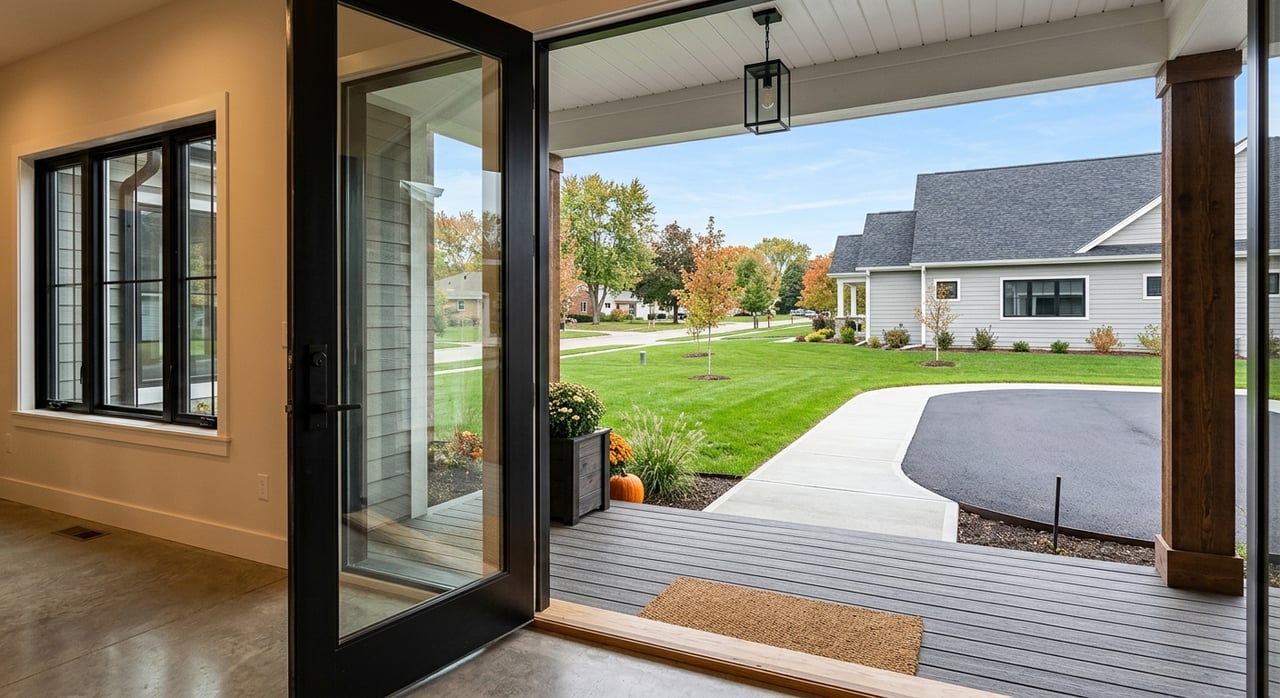
Thinking about buying brand-new instead of resale in Bloomington or Monroe County? A new construction home can give you modern finishes, energy-efficient systems, and the chance to personalize details, but it also comes with a different set of risks and decisions. If you want fewer surprises and a smoother path to closing, it helps to understand how the local process works before you sign a contract. Let’s dive in.
Why new construction works differently
Buying an existing home usually means evaluating the property as it sits today. With new construction, you are often evaluating a builder, a lot, a contract, and a timeline that depends on permits, inspections, and site conditions.
In Bloomington and Monroe County, that difference matters. Local guidance shows that new residential construction can involve pre-design review, permit approvals, stormwater requirements, and multiple inspections before a home is ready for occupancy. That means your due diligence should go beyond floor plans and design selections.
Know the local permit path
One of the biggest misconceptions about new construction is that once the contract is signed, the home simply gets built. In reality, the build process depends on local approvals, and those steps can affect timing from the very beginning.
Monroe County states that beginning January 1, 2026, Class 2 projects, including new single-family homes, duplexes, and townhomes up to three stories, must complete the Improvement Location Permit process before the applicant goes to the Monroe County Building Department. The county also lists a free Residential Construction Planning Pre-Design as the first step.
If the home is within Bloomington city limits, permit coordination can involve more than one office. The city says building permits are handled through the Monroe County Building Department, while some grading and earth-disturbance work may go through the City of Bloomington Utilities Stormwater Management Permit process, and pre-construction guidance may also involve Bloomington Planning and Transportation for grading, excavation, right-of-way, bonding, and site inspection matters.
What this means for you
You do not need to manage the permit file yourself, but you should ask clear questions before you commit. A builder or community representative should be able to explain what approvals are still pending and what has already been completed.
Ask for clarity on:
- Whether the lot is already fully approved for the planned home
- Whether grading or stormwater approvals are still needed
- Whether the projected completion date accounts for local review timelines
- Which party is handling permit coordination
- Whether any site work could delay construction starts
Pay close attention to the lot
In Southern Indiana, lot conditions can be just as important as the house itself. A beautiful floor plan on a challenging site can create delays, extra costs, or post-closing frustration if drainage and grading issues are not addressed early.
Monroe County stormwater rules note that permits may be triggered by land disturbance of one acre or more, smaller work that is part of a common plan of development, and certain new single-family dwellings that require certified plot plans. County guidance also flags karst conservancy areas, sinkholes, wetlands, drainage easements, and similar site conditions as issues to identify early.
The state also regulates some larger land-disturbing activity. IDEM says the Construction Stormwater General Permit applies to construction and land-disturbing activities that disturb one acre or more.
Site questions worth asking
Before you move forward, ask practical questions about the lot itself, not just the home design. This is especially important if you are buying early in the build process.
Consider asking:
- Has the lot been reviewed for drainage concerns?
- Are there known sinkholes, karst features, wetlands, or easements affecting the site?
- Will the builder provide a certified plot plan if required?
- What grading is included in the base price?
- How will water be directed away from the home after completion?
These questions can help you understand whether the homesite is straightforward or whether it may require more attention during the build.
Vet the builder before you sign
A new construction purchase is also a decision about who is building the home. That makes builder research a key part of protecting your investment.
The Indiana Attorney General recommends taking time, researching contractors, comparing bids and services, and getting bids in writing. The same guidance says your contract should include the price, payment schedule, detailed scope of work and materials, estimated start and completion dates, the contractor’s name and address, a contact person, and the contractor’s signature.
Monroe County also states that its Building Department maintains the licensing and registration program for electricians and plumbers working within the county. That makes it reasonable to confirm that trades working on your home meet local requirements.
What should be in writing
With new construction, verbal promises can easily turn into confusion later. If something affects your cost, timeline, or expectations, ask for it in writing before you move ahead.
Important items to document include:
- Base price and lot premium
- Elevation or exterior design choice
- Finish packages and allowances
- Appliance brands or substitution terms
- Exterior features and landscaping details
- Upgrade pricing
- Change-order procedures
- Estimated build timeline
- Warranty terms
If you plan to add separate upgrade or improvement work, Indiana Attorney General guidance says home improvement contracts over $150 must be in writing. That is another reason to keep every add-on clearly documented.
Understand inspections and occupancy
Many buyers assume a new home is move-in ready as soon as construction looks complete. Locally, there is a formal inspection process that must happen before occupancy.
Monroe County publishes a staged inspection schedule for residential new construction that includes footing, foundation, underslab, rough-in, fireblocking, final, and other inspections as needed. The county says inspections must be scheduled at least 24 hours in advance, the orange permit card must be visible from the road, and the owner, contractor, or a representative should attend inspections.
After the final inspection and any other required agency inspections, the county processes a Certificate of Occupancy. Monroe County states that using the structure before receiving that document is a violation of the law.
Why timelines can shift
This is one reason new construction timelines sometimes extend beyond the original estimate. Even when the house appears nearly finished, there may still be outstanding inspections, paperwork, or site items that must be completed before occupancy.
For buyers, the practical takeaway is simple. Build extra flexibility into your moving plans, especially if you are coordinating a lease ending, a home sale, or a job relocation.
Consider your own home inspection
County inspections and your own inspection serve different purposes. Local inspections focus on code compliance and occupancy requirements, while your inspector is working for you as the buyer.
That is why many buyers choose an independent inspector for a pre-drywall review, a final walkthrough inspection, or both. Indiana’s Professional Licensing Agency says home inspectors are licensed in Indiana and provides a license-verification tool.
When an independent inspection can help
An independent inspection can give you another set of eyes on the home before closing. It may help you identify incomplete items, workmanship concerns, or questions to raise with the builder before the final walkthrough.
If you choose this route, ask the inspector about the best timing based on the stage of construction. A pre-drywall inspection and a near-completion inspection often provide the clearest picture.
Review the warranty line by line
A builder warranty can be valuable, but it is only as helpful as your understanding of what it actually covers. Do not assume all warranties are the same.
Indiana has a statutory chapter titled Construction Warranties on Real Property. In practice, buyers should review the warranty closely and confirm what is covered, how long coverage lasts, what is excluded, whether the warranty transfers, and how claims must be submitted.
For Bloomington and Monroe County buyers, it is also smart to ask how the builder handles site-related items during the punch-list and warranty period. Because local site conditions can involve drainage, grading, and related issues, those details deserve extra attention.
Warranty questions to ask
Before closing, make sure you understand:
- What labor and materials are covered
- How long each category of coverage lasts
- What exclusions apply
- Whether grading or drainage concerns are addressed
- How to submit a claim
- Whether the warranty transfers to a future owner
- Who your point of contact will be after closing
The Indiana Attorney General also advises consumers to keep the contract, change orders, warranties, and correspondence, and to avoid final payment until subcontractors and suppliers have been paid.
Keep organized records from day one
New construction creates more paperwork than many buyers expect. Selections, allowances, upgrades, change orders, warranty documents, and inspection notes can pile up quickly.
Keeping a clean file from the start can save you time and stress later. If a question comes up about pricing, timing, or warranty coverage, your records may be the fastest way to resolve it.
A simple recordkeeping system should include:
- Your signed purchase contract
- All addenda and change orders
- Design and finish selections
- Payment records
- Written warranty terms
- Inspection reports
- Builder emails and written approvals
- Final walkthrough notes
How to buy with more confidence
Buying new construction in Southern Indiana can be a great move if you go in with the right expectations. The key is understanding that you are not just buying a finished home. You are buying into a process shaped by local permits, lot conditions, contract details, inspection milestones, and warranty terms.
When you ask sharper questions early, you are better positioned to protect your timeline, your budget, and your peace of mind. In a market like Bloomington and Monroe County, that kind of preparation can make the experience feel much more manageable.
If you are weighing new construction in Southern Indiana and want a local, steady guide through the process, Paul Kiger can help you compare options, ask the right questions, and move forward with confidence.
FAQs
What should buyers in Bloomington ask about new construction permits?
- Ask whether the lot has completed the required local approval steps, whether stormwater or grading approvals are still pending, and whether the estimated completion date reflects those timelines.
What lot issues matter most for new construction in Monroe County?
- Drainage, karst features, sinkholes, wetlands, drainage easements, and certified plot plan requirements are important issues to identify early.
What should be included in a Southern Indiana new construction contract?
- At a minimum, look for the price, payment schedule, scope of work, materials, estimated start and completion dates, contractor information, signature, upgrade terms, and written warranty details.
Do buyers still need an inspection on a new construction home in Indiana?
- Many buyers choose one because county inspections focus on code and occupancy, while an independent licensed inspector provides a separate buyer-focused review.
When can you move into a new construction home in Monroe County?
- You should wait until the final inspection process is complete and the Certificate of Occupancy has been issued.
What records should buyers keep during a new construction purchase?
- Keep your contract, addenda, change orders, warranties, correspondence, inspection reports, payment records, and final walkthrough notes.